In the vibrant world of early childhood education, preschool learning games play a crucial role in shaping young minds. These games transform learning into an exciting adventure, fostering creativity, critical thinking, and social skills. They not only engage children but also lay the foundation for lifelong learning.
With a variety of options available, parents and educators can choose games that cater to different developmental stages and interests. From interactive digital platforms to hands-on activities, preschool learning games offer a rich blend of fun and education. By integrating play into the learning process, children develop essential skills while enjoying every moment.
Overview of Preschool Learning Games
Preschool learning games serve as vital tools in early childhood development. These games engage young children in activities that promote essential skills, including cognitive, physical, and emotional abilities. They focus on hands-on play, stimulating curiosity and encouraging exploration.
Types of preschool learning games include:
- Interactive Games: Games that require the active participation of children, enhancing their motor skills and problem-solving capabilities.
- Educational Apps: Digital platforms that provide a range of subjects, from math to language skills, through fun and interactive content.
- Creative Arts and Crafts: Activities involving drawing, painting, or building, which develop fine motor skills and creative expression.
- Role-playing Games: Games that allow children to imitate adult roles, fostering social skills and emotional understanding.
Benefits of preschool learning games are significant. They support the development of critical thinking as children analyze situations and make decisions during play. These activities promote collaboration and communication among peers, aiding social skill growth. Additionally, they contribute to emotional regulation by providing a safe space for children to express feelings.
Overall, preschool learning games blend education with enjoyment, making them an essential component of early learning. They accommodate various learning styles and cater to children’s diverse interests, making learning effective and fun.
Benefits of Preschool Learning Games
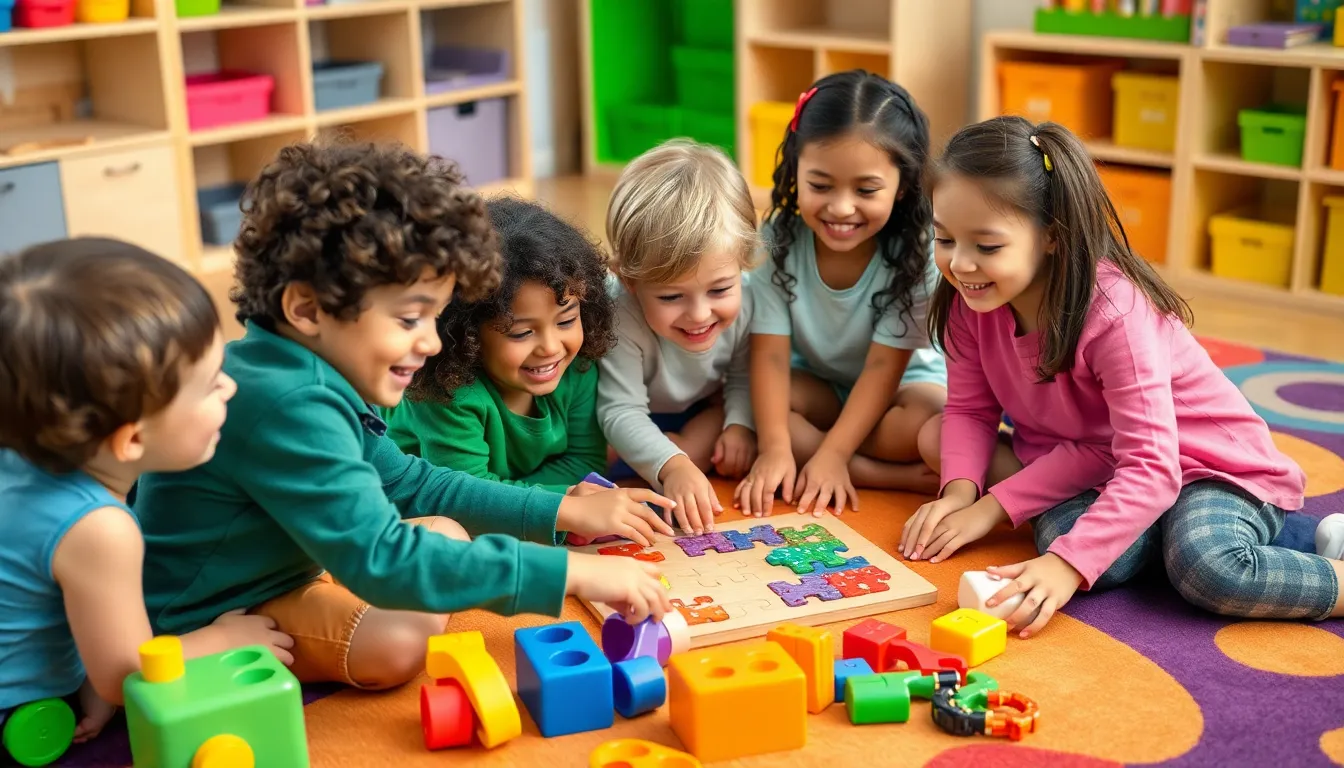
Preschool learning games provide numerous advantages that significantly impact early childhood development. These games support cognitive growth and reinforce social skills, laying the groundwork for future learning.
Cognitive Development
Cognitive development plays a crucial role in a child’s early education. Preschool learning games stimulate problem-solving skills, memory retention, and critical thinking through engaging activities.
- Enhanced Memory: Games that require children to remember patterns or sequences improve their memory capacity.
- Problem Solving: Puzzle games encourage children to develop strategies and think critically to find solutions.
- Math Skills: Counting games introduce basic mathematics, aiding in number recognition and value understanding.
- Language Acquisition: Word games expand vocabulary and enhance language skills, facilitating better communication.
Social Skills Enhancement
Social skills enhancement is vital for children’s interactions with peers. Preschool learning games foster teamwork and cooperation amongst children.
- Collaboration: Group games teach children the importance of working together to achieve a common goal.
- Communication: Role-playing games promote verbal skills, allowing children to express themselves and understand others.
- Empathy: Social games that encourage taking turns help children develop empathy and patience.
- Conflict Resolution: Interactive games provide scenarios to practice resolving disagreements constructively.
These benefits underscore the importance of incorporating preschool learning games into early education, promoting a holistic development approach.
Types of Preschool Learning Games
Preschool learning games encompass various formats that cater to children’s developmental needs. These games span interactive digital platforms and physical play, offering diverse ways for children to engage and learn.
Interactive Digital Games
Interactive digital games engage children through technology, making learning fun and dynamic. These games cover subjects like math, language, science, and problem-solving. Example games include:
- Educational apps: Offer age-appropriate content that aligns with preschool curriculum standards.
- Puzzle games: Enhance critical thinking and logic skills through interactive challenges.
- Memory games: Boost recall and memory retention using engaging visual elements.
These digital games often incorporate colorful graphics, sounds, and rewards to maintain interest and motivation. Many platforms allow children to practice skills at their own pace, facilitating personalized learning experiences.
Physical Play-Based Games
Physical play-based games encourage active participation and social interaction among preschoolers. These games promote gross motor skills and collaboration. Examples include:
- Obstacle courses: Develop coordination and balance while enhancing physical fitness.
- Role-playing games: Foster creativity and emotional understanding through imaginative scenarios.
- Group games: Promote teamwork and communication, such as tag or relay races.
Physical games engage multiple senses, support healthy habits, and create opportunities for children to practice social skills. Children learn valuable lessons in sharing, taking turns, and resolving conflicts during these activities.
Tips for Selecting Preschool Learning Games
Selecting appropriate preschool learning games enhances a child’s developmental experience. Consider the following factors to ensure the chosen games meet educational needs.
Age Appropriateness
Choose games tailored to the child’s age and developmental stage. Games designed for younger preschoolers, ages 2 to 3, focus on basic skills like color recognition and shape identification. For older preschoolers, ages 4 to 5, look for games that promote more complex skills, such as critical thinking and problem-solving. Always check the recommended age range on packaging or descriptions to align the game’s difficulty level with the child’s abilities.
Learning Objectives
Identify clear learning objectives when selecting preschool learning games. Ensure the games not only entertain but also teach specific concepts. For example, games that focus on counting and number recognition support early math skills, while storytelling games enhance language development and comprehension. Incorporate various learning objectives to address cognitive, emotional, and physical development. Evaluating the educational value of each game ensures it contributes positively to the child’s overall growth.
Preschool learning games play a crucial role in shaping a child’s early educational journey. By blending fun and learning, these games create an engaging environment that nurtures essential skills. They not only support cognitive development but also enhance social interactions and emotional growth.
Choosing the right games tailored to a child’s developmental stage ensures a balanced approach to learning. With a variety of options available, parents and educators can easily find activities that resonate with children’s interests while meeting educational objectives. Embracing preschool learning games is a step towards fostering a lifelong love for learning in young minds.