In today’s fast-paced world, fostering creativity and problem-solving skills in children is more important than ever. Design thinking, a human-centered approach to innovation, offers young minds the tools they need to tackle challenges with confidence. By engaging in this process, children learn to empathize, define problems, ideate solutions, prototype, and test their ideas, all while developing critical thinking skills.
Introducing design thinking in educational settings not only enhances creativity but also encourages collaboration and resilience. As children navigate through real-world problems, they become adept at thinking outside the box, preparing them for future challenges. This article explores the transformative impact of design thinking on children, highlighting its benefits and practical applications in nurturing the next generation of innovators.
Understanding Design Thinking Children
Design thinking nurtures creativity and critical problem-solving in children. This framework emphasizes five key stages: empathy, define, ideate, prototype, and test.
- Empathy: Children learn to understand different perspectives, identifying needs of users through observation and engagement.
- Define: Children articulate specific problems based on their empathetic insights, honing their ability to analyze and synthesize information.
- Ideate: Children brainstorm multiple solutions, encouraging divergent thinking and innovation through collaborative discussions.
- Prototype: Children create tangible representations of their solutions, transforming abstract ideas into visible forms for experimentation.
- Test: Children gather feedback on their prototypes, refining their innovations based on actual user experiences.
Integrating design thinking in education boosts collaboration among peers. It fosters resilience, allowing children to iterate on their designs while learning from failures. This hands-on approach positions them as active participants in their learning, promoting engagement and ownership. Ultimately, design thinking empowers children with skills and mindsets essential for addressing future challenges.
Importance of Design Thinking in Childhood
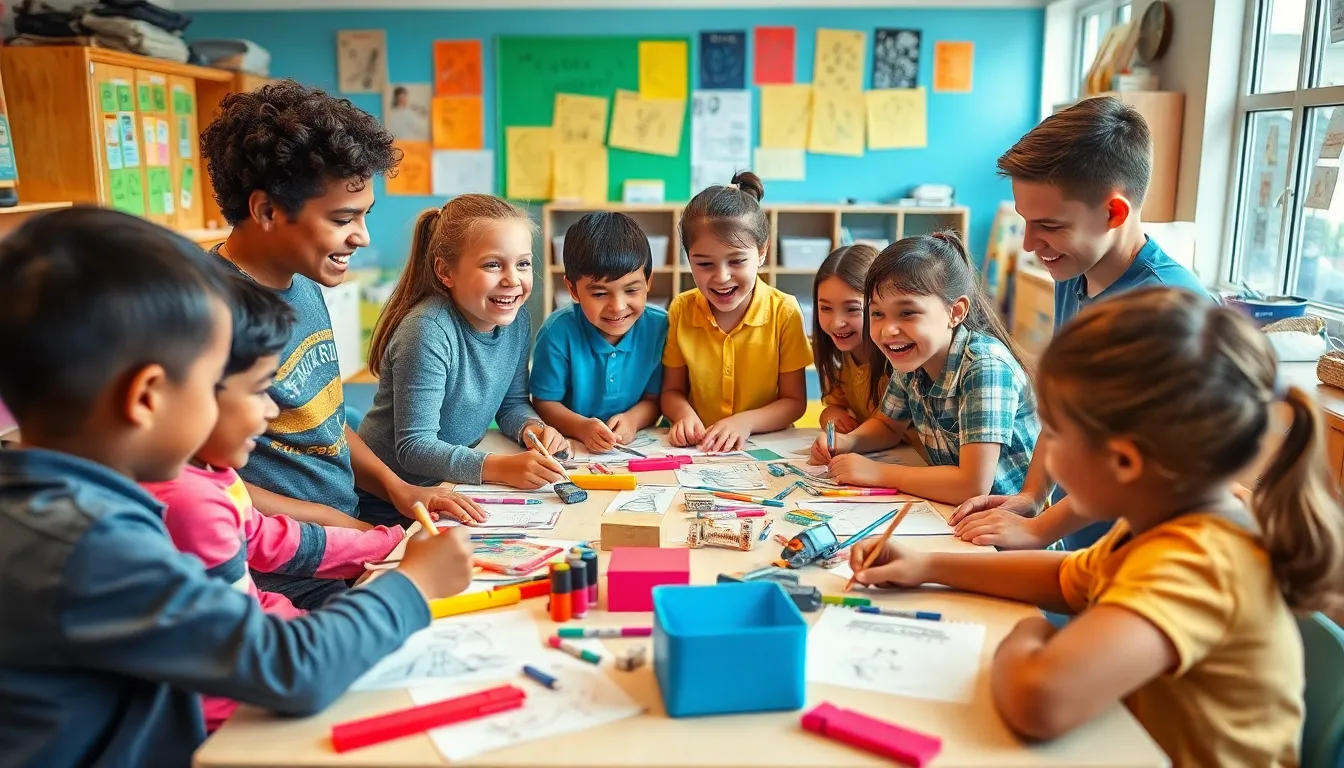
Design thinking plays a crucial role in childhood development, equipping children with lifelong skills. By engaging in this process, children enhance creativity and problem-solving abilities, essential for navigating complex environments.
Fostering Creativity
Design thinking nurtures creativity by encouraging children to explore diverse ideas. Children engage in brainstorming sessions that promote free expression of thoughts, allowing them to envision multiple solutions to a single problem. The ideation phase supports divergent thinking, where imaginative concepts can thrive without constraints. Activities involving prototyping further stimulate creativity, as children experiment with different materials, transforming abstract thoughts into tangible forms.
Enhancing Problem-Solving Skills
Design thinking significantly enhances problem-solving skills in children. Through the empathy stage, they learn to recognize and understand the needs of others, defining problems more accurately. The iterative nature of design thinking fosters a mindset focused on exploration and refinement. When children prototype their solutions, they embrace challenges and failures as learning opportunities. Testing their innovations cultivates resilience, enabling them to adapt and improve continuously. This rigorous approach equips children with the tools to tackle real-world issues effectively.
Key Principles of Design Thinking
Design thinking revolves around several key principles that empower children to innovate and problem-solve effectively. These principles promote understanding, creativity, and hands-on experimentation.
Empathy
Empathy serves as the foundation of design thinking. It encourages children to step into the shoes of others and understand diverse perspectives. By engaging with peers, they learn to observe reactions and listen actively. This practice equips children to identify the actual needs behind problems, fostering sensitivity and deeper connections with their community. Empathy cultivates a culture of respect and collaboration, allowing children to develop solutions that resonate meaningfully with others.
Ideation
Ideation focuses on generating a wide range of ideas and solutions. During this stage, children brainstorm without constraints, encouraging free-flowing thoughts and creativity. Techniques such as mind mapping or sketching assist in visualizing concepts. By providing a safe environment for exploration, children feel empowered to share unconventional ideas. This breadth of creativity can lead to innovative solutions that they may not have considered otherwise, reinforcing the value of collaboration.
Prototyping and Testing
Prototyping and testing transform ideas into tangible representations. Children create models or mock-ups to communicate concepts more concretely. This hands-on process allows them to visualize their ideas and understand practical aspects. Testing prototypes invites feedback from peers and encourages iterative improvement. Children learn to identify what works and what doesn’t, reinforcing resilience and adaptability. This stage solidifies critical problem-solving skills, as they learn to view setbacks as stepping stones to success.
Implementing Design Thinking in Education
Integrating design thinking into educational settings engages children in innovative problem-solving experiences. Through structured activities, children gain hands-on experience with empathy, ideation, and prototyping.
Classroom Activities
Classroom activities foster collaboration and critical thinking skills through interactive learning experiences.
- Empathy Mapping: Children create empathy maps to visualize perspectives of different stakeholders affected by a problem.
- Brainstorming Sessions: Guided ideation activities encourage students to generate diverse ideas without judgment, promoting creative thinking.
- Rapid Prototyping: Groups design and construct quick prototypes using everyday materials, facilitating experimentation and iteration.
- Feedback Circles: Peers review prototypes, offering constructive feedback that helps refine ideas and strengthens communication skills.
These activities encourage teamwork and resilience while allowing children to apply design thinking principles directly in their learning environment.
Home-based Projects
Home-based projects extend design thinking beyond the classroom, providing families with opportunities to engage together.
- Community Impact Projects: Families identify local challenges and collaborate on solutions, fostering a sense of empathy and community involvement.
- Inventor’s Journal: Children maintain journals to sketch ideas and prototypes for personal inventions, enhancing reflective thinking and creativity.
- DIY Challenges: Parents and children can tackle DIY projects that require problem-solving and prototyping, encouraging hands-on learning and experimentation.
- Design Competitions: Families can participate in local or online design contests, reinforcing teamwork while applying design thinking skills collaboratively.
These projects help cultivate an innovative mindset and encourage continuous learning at home, reinforcing concepts learned in school.
Embracing design thinking in children’s education is a powerful way to nurture their creativity and problem-solving abilities. By engaging in this hands-on approach, children not only learn to empathize and collaborate but also develop resilience and critical thinking skills.
As they navigate through the stages of design thinking, they become adept at tackling real-world challenges. This innovative mindset prepares them to become future leaders and innovators.
Encouraging design thinking both in schools and at home cultivates a culture of exploration and experimentation. Ultimately, this empowers children to embrace challenges and view failures as stepping stones to success.